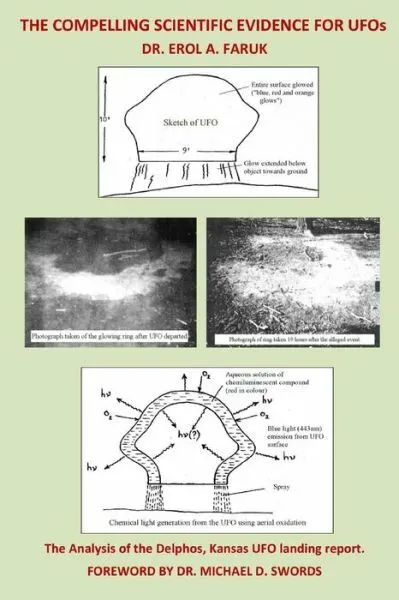
Delphos Soil Sample Analysis
Type: Environmental Analysis
Source:
The 1971 Delphos, Kansas landing ring soil samples were analyzed by Erol A. Faruk in the 1970s and Phyllis A. Budinger in 1999, revealing anomalous chemical properties inconsistent with natural fungal activity. The ring soil was hydrophobic, dry to a depth of at least twelve inches, and contained a white, crystal-like fibrous material and calcium oxalate.
Key findings from the analyses include:
Chemical Composition: The soil contained high levels of fulvic acid (a humic substance), calcium oxalate, and calcium carbonate, along with unidentified hydrocarbons and organic fibers.
Physical Anomalies: The soil was more acidic and contained more soluble salts than surrounding soil. It remained impermeable to water and exhibited chemiluminescent (glowing) properties.
Witness Effects: The presence of oxalic acid and sulfides/mercaptans was linked to the numbing effects reported by witnesses and the foul odor emanating from the site.
Interpretations: While some skeptics attribute the ring to fungal activity (fairy rings) or agricultural residue, researchers like Faruk and Budinger argue the unique combination of hydrophobicity, glow, and specific organic compounds suggests an unusual external release, potentially from a UFO propulsion system.
Evidence Files