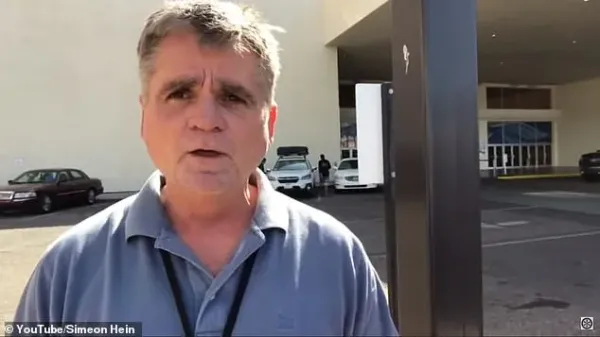
Kevin Day
Kevin Day is a retired U.S. Navy Senior Chief Operations Specialist who served as the primary radar operator aboard the USS Princeton during the 2004 USS Nimitz UFO incident. He is credited as the first military personnel to detect and track the anomalous aerial vehicles, known as Anomalous Aerial Vehicles (AAVs), which led to the visual engagement by fighter pilots.
Radar Detection: Starting around November 10, 2004, Day monitored the AN/SPY-1B radar on the USS Princeton, a Ticonderoga-class cruiser accompanying the USS Nimitz carrier strike group. He detected groups of 5 to 10 objects appearing at altitudes of approximately 80,000 feet, moving at slow speeds (around 100 knots) before dropping to lower altitudes.
Key Observations: Day reported that these objects exhibited impossible flight characteristics, such as dropping from 80,000 feet to sea level in less than a second without disintegrating due to G-forces. He noted over 100 contacts over ten days, describing the radar display as looking like "snow falling from the sky."
Initiating Engagement: Day convinced commanding officers to divert F/A-18 fighter jets, including those piloted by Cmdr. David Fravor and Lt. Cmdr. Alex Dietrich, to visually intercept the objects. His radar data corroborated the pilots' sightings of the famous "Tic Tac" shaped object.
Aftermath and Advocacy: Day claims he faced ridicule and professional repercussions within the Department of Defense for reporting the incident, stating he was "made the butt of jokes" and eventually left the military out of frustration. He has since become a vocal advocate for UAP transparency, founding the non-profit UAP eXpeditions and testifying about his experiences to bring attention to the incident.