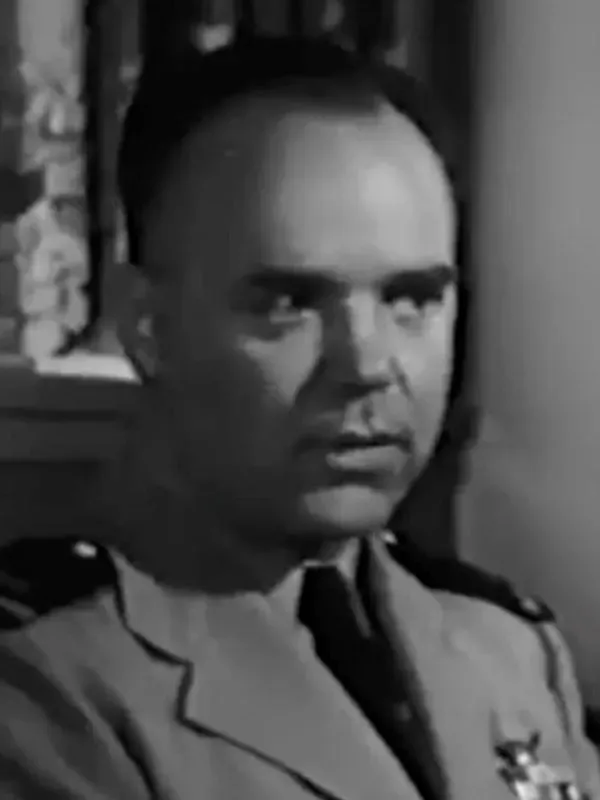
Delbert C. Newhouse
On July 2, 1952, U.
S. Navy photographer Delbert C. Newhouse filmed a formation of 12 to 14 metallic, disc-shaped objects maneuvering in the sky near Tremonton, Utah. Newhouse, a qualified observer with over 20 years of experience, used a 16mm Bell & Howell camera to capture approximately 40 to 50 feet of color footage as the objects moved in elliptical patterns before one broke away and the rest vanished over the horizon.
The film was submitted to Hill Air Force Base and subsequently reviewed by Project Blue Book and the Robertson Panel. While Newhouse and later investigators like Dr. James McDonald argued the objects were too large and complex to be birds, the Robertson Panel dismissed the sighting as seagulls riding thermals, a conclusion supported by some Air Force consultants who noted the objects' bright, featureless appearance.
Newhouse consistently maintained that the original film was retained by the Air Force and that he only received back a poor-quality copy with significant portions of the footage missing or cut. Despite the official dismissal, the incident remains one of the most analyzed UFO cases of the 1952 wave, with modern enthusiasts often citing the footage as compelling evidence of unidentified aerial phenomena.